
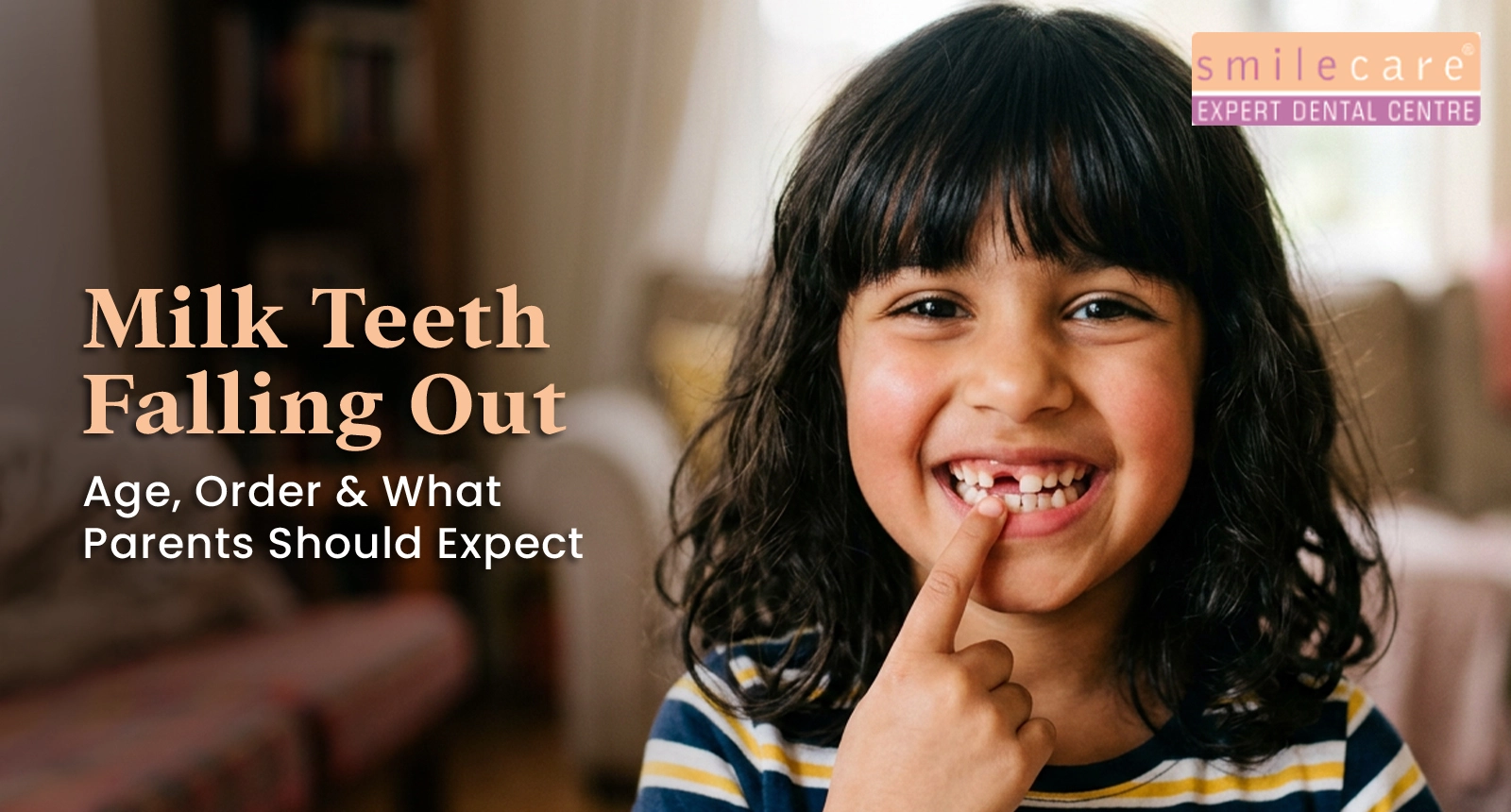
One day your child is learning how to count numbers…
And the next day, they come running toward you with a tiny tooth in their hand saying,
“Look! My tooth fell out!”
For parents, the phase of milk teeth falling out feels emotional, exciting, confusing, and slightly stressful, all at once.
Suddenly, there are a hundred questions.
“Is this the right age?”
“Why is the new tooth growing behind the old one?”
“Should we pull the loose tooth out?”
“What exactly is the normal milk teeth breaking age?”
And honestly, every parent goes through this stage.
The good news is that in most cases, the process of milk teeth fall out is completely natural and healthy. Every child follows a slightly different timeline, but understanding what normally happens can make this entire growing phase much easier for parents.
Because when children start losing teeth, it’s not just about dental changes.
It’s one of those moments that quietly reminds parents their child is growing up.
So if your little one has started wiggling teeth, smiling with gaps, or becoming extra excited about the tooth fairy, here’s everything parents should know about milk teeth, the normal milk teeth age, the expected order of tooth loss, and what to actually expect during this phase.
What Are Milk Teeth?
Before understanding when they fall out, let’s first understand what they actually are.
Milk teeth, also known as baby teeth or primary teeth, are the very first set of teeth children develop.
Most children have 20 milk teeth in total:
- 10 in the upper jaw
- 10 in the lower jaw
These teeth begin appearing during infancy and usually continue erupting until around age 2–3 years.
A lot of people assume baby teeth are “temporary” and therefore not very important.
But that’s actually not true.
Milk teeth play a major role in:
- Helping children chew food properly
- Supporting speech development
- Maintaining facial structure
- Guiding permanent teeth into correct positions later
In simple words, healthy baby teeth help create a healthy foundation for permanent teeth.
That’s why taking care of them matters much more than people think.
At What Age Do Milk Teeth Start Falling Out
This is probably the most common question parents ask.
“What is the correct milk teeth falling age?”
In most children, the first tooth usually starts becoming loose around the age of 6 years.
This stage marks the beginning of what dentists call the “mixed dentition phase,” where children temporarily have both baby teeth and permanent teeth together.
However, every child develops differently.
Some children may start losing teeth at 5 years old.
Others may begin closer to 7 years.
And in many cases, both are perfectly normal.
The average milk teeth breaking age generally follows this timeline:
- First loose tooth: Around 6 years
- Most milk teeth replaced: Between 6–12 years
- Last baby teeth lost: Around 12–13 years
So if your child’s classmates are losing teeth earlier or later, there’s usually no need to panic immediately.
Dental development varies from child to child.
Which Teeth Fall Out First?
Interestingly, teeth usually fall out in the same order they first appeared.
The first milk teeth to fall out are generally the lower front teeth.
Here’s the usual order:
1. Lower Central Incisors (Bottom Front Teeth)
Expected age: Around 6–7 years
These tiny front bottom teeth are usually the first ones parents notice becoming loose.
This is also the stage where children constantly keep touching the tooth with their tongue.
2. Upper Central Incisors (Top Front Teeth)
Expected age: Around 6–8 years
These teeth create the classic adorable “gap smile” phase most children go through.
For many parents, this is the moment their child suddenly starts looking much older.
3. Lateral Incisors
Expected age: Around 7–8 years
These are the teeth beside the front teeth.
At this point, children often start comparing missing teeth with friends in school.
4. First Molars
Expected age: Around 9–11 years
These teeth are larger and help with chewing food properly.
Children may notice slightly more pressure while these teeth become loose.
5. Canines
Expected age: Around 9–12 years
These pointed teeth usually take a little longer to fall out.
6. Second Molars
Expected age: Around 10–12 years
These are generally the last milk teeth to fall out before the permanent smile fully develops.
Why Do Milk Teeth Become Loose?
This part sounds slightly strange… but it’s fascinating.
The roots of the milk teeth slowly dissolve naturally underneath the gums.
As permanent teeth start developing below, they push upward and gradually loosen the baby teeth above them.
That’s why the tooth starts wiggling.
And eventually, it falls out naturally.
This process is completely normal during the expected milk teeth falling age.
Should Parents Pull Out Loose Teeth?
Every parent eventually faces this question.
And honestly, children usually become very dramatic about loose teeth.
Some keep wiggling it every 30 seconds.
Some refuse to eat properly.
Some get scared the moment the tooth moves.
The important thing is not to force the tooth out too early.
If the tooth is hanging very loosely, gentle removal may happen naturally during eating or brushing.
But pulling it aggressively can:
- Cause unnecessary pain
- Lead to bleeding
- Damage nearby gums
- Create fear around dental visits
In most cases, it’s best to let milk teeth fall out naturally.
What If Permanent Teeth Start Growing Before Baby Teeth Fall Out?
This situation scares many parents.
Sometimes a permanent tooth begins growing behind the baby tooth before the old tooth falls out completely.
This is commonly called “shark teeth.”
And surprisingly, it’s fairly common.
In many cases:
- The baby tooth loosens naturally later
- Tongue movement gradually helps reposition the permanent tooth
- No major treatment is needed
However, if the baby tooth stays stuck for too long or blocks the permanent tooth significantly, a dentist may recommend further evaluation.
Do All Children Lose Teeth at the Same Age?
No.
The exact milk teeth age differs slightly for every child.
Factors that influence timing include:
- Genetics
- Growth patterns
- Nutrition
- General health
- Early or late tooth eruption
Some children simply mature faster dentally than others.
That’s why comparing your child’s tooth timeline with another child often creates unnecessary stress.
Why Taking Care of Milk Teeth Still Matters
One of the biggest myths parents hear is:
“They’re just baby teeth anyway.”
But healthy milk teeth are extremely important.
If baby teeth develop severe cavities or infections:
- Permanent teeth can get affected
- Jaw spacing may change
- Speech development can get impacted
- Alignment problems may develop later
Even during the phase of milk teeth fall out, oral hygiene still matters a lot.
Children should continue:
- Brushing twice daily
- Reducing sugary snacks
- Drinking enough water
- Visiting the dentist regularly
Because healthy baby teeth support healthy permanent teeth later.
Signs Parents Should Not Ignore
While most tooth loss is completely natural, certain signs should not be ignored.
Parents should consider a dental evaluation if:
- Teeth fall out extremely early
- There’s severe pain or swelling
- Permanent teeth appear highly crowded
- Baby teeth remain stuck for too long
- There’s difficulty chewing
- Bleeding becomes excessive
Early guidance can help avoid future dental complications.
The Emotional Side of Losing Teeth
For children, losing teeth feels like a major achievement.
And honestly, for parents too.
It’s one of those tiny reminders that childhood is moving faster than expected.
The first missing tooth.
The first tooth fairy excitement.
The tiny gap smiles in photos.
These moments become memories very quickly.
That’s why making this phase positive is important.
Avoid creating fear around loose teeth or dental visits. Instead:
- Celebrate the milestone
- Keep conversations reassuring
- Encourage healthy brushing habits
- Make dental care feel normal and comfortable
Because a child’s confidence around oral care often starts during these early experiences.
Growing Smiles Need the Right Care
The journey of milk teeth falling age is not just about teeth.
It’s about growth, development, confidence, and creating healthy habits for life.
And while every child follows a slightly different timeline for milk teeth breaking age, understanding what’s normal can make parents feel much more relaxed during the process.
At Smilecare, we believe every child deserves a comfortable and positive dental experience from the beginning. From monitoring healthy milk teeth development to guiding parents through every stage of growing smiles, our focus is always on helping children build healthier, happier, and more confident smiles naturally.

