
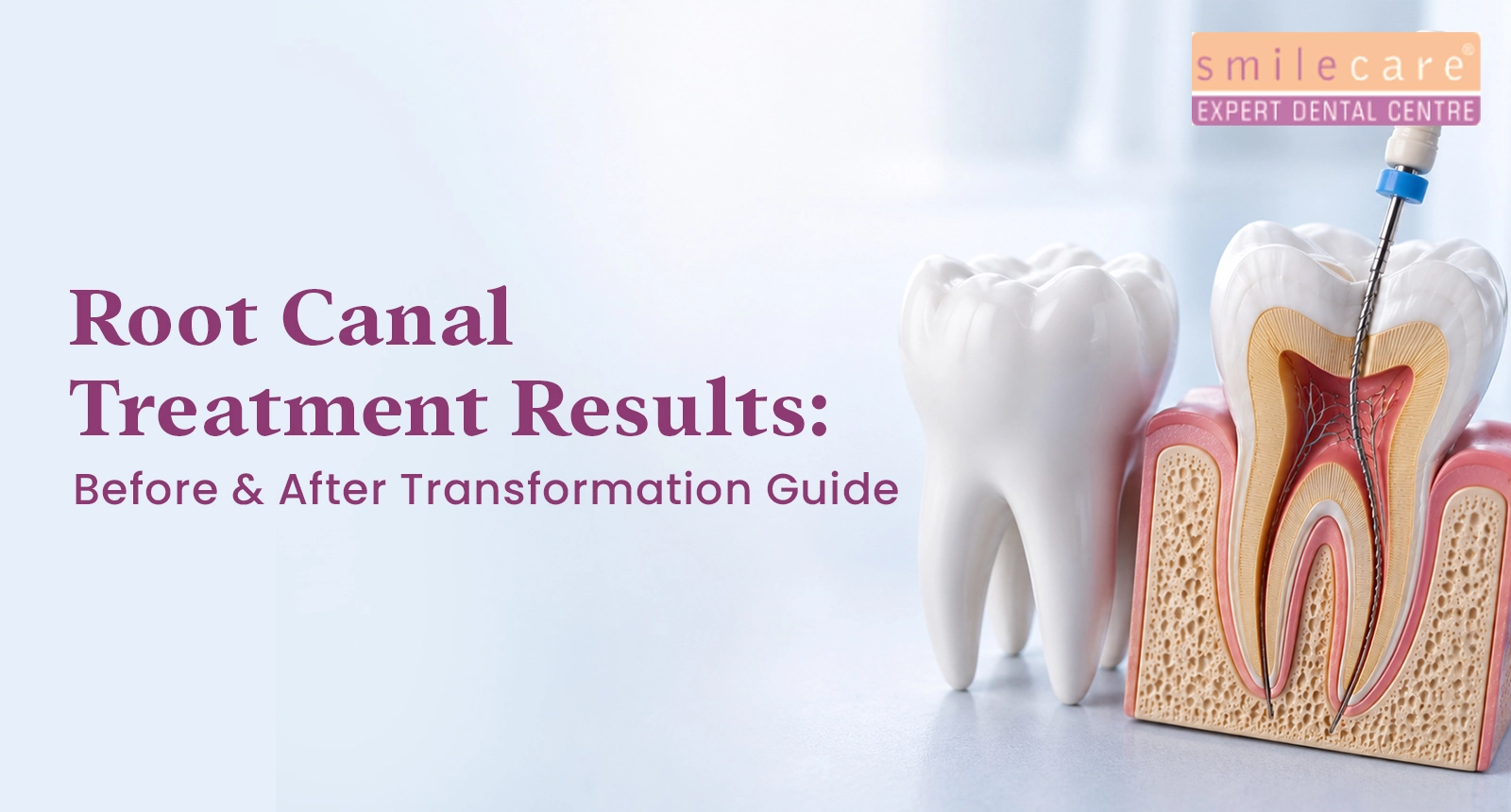
“Root canal.”
For many people, just hearing those two words is enough to make them nervous.
Will it hurt?
Will my tooth look different afterward?
Can I eat normally?
Will the tooth become weak?
And most importantly, what actually changes before and after the treatment?
These are completely understandable questions.
A root canal treatment is usually recommended when the soft tissue inside a tooth, called the pulp, becomes inflamed, infected, or damaged. Instead of removing the entire tooth, the dentist treats the inside of it and works to preserve the natural tooth wherever appropriate.
That’s why looking at root canal before and after results isn’t simply about comparing how a tooth looks. The real transformation may include relief from infection-related pain, restoration of function, and protection of the tooth with the appropriate final restoration.
If you’ve been scrolling through before-and-after root canal pictures trying to understand what your own experience could look like, this guide breaks down the journey from the first symptoms to life after treatment.
First, Why Is a Root Canal Needed?
Imagine having a tooth that looks completely normal from the outside.
But inside?
Something isn’t right.
A deep cavity, crack, previous injury, or other damage can allow the pulp inside the tooth to become inflamed or infected.
You may experience symptoms such as persistent toothache, sensitivity to hot or cold, pain while chewing, gum swelling, tenderness, or a pimple-like bump near the affected tooth.
Sometimes, however, symptoms can become less obvious even though the pulp has been severely damaged.
That’s why a tooth that suddenly stops hurting isn’t necessarily a tooth that has healed.
A dental examination and X-rays are often needed to determine what is actually happening inside.
What Does a Tooth Look or Feel Like Before a Root Canal?
There isn’t one universal “before.”
For some people, the biggest problem is pain.
For others, it’s swelling.
Some notice discoloration.
And some discover the problem during a routine dental check-up before severe symptoms even develop.
So when you look at root canal before and after comparisons online, remember that every case begins differently.
Before treatment, the affected tooth may have a deep cavity, a crack, significant sensitivity, tenderness while chewing, an infection around the root, or changes in colour.
The goal of root canal treatment is to address the problem inside the tooth and preserve the tooth whenever possible.
What Actually Happens During Root Canal Treatment?
The process sounds much more intimidating than it actually is.
Treatment generally begins with numbing the area so you remain comfortable.
The dentist then creates access to the inside of the tooth and removes the inflamed or infected pulp tissue.
The root canals are carefully cleaned and shaped before being filled and sealed.
Depending on the condition and location of the tooth, a filling or crown may then be recommended to restore and protect it.
Some treatments can be completed relatively quickly, while others may require additional appointments depending on the complexity of the tooth and the extent of infection.
That’s why your personal before and after root canal journey may not look exactly like someone else’s.
Immediately After a Root Canal: What Should You Expect?
Here’s something people are often surprised by:
Your tooth may not immediately feel completely “normal” the moment you leave the dental clinic.
And that doesn’t automatically mean anything has gone wrong.
The area around the treated tooth may feel tender for a short period, particularly if there was significant inflammation or infection beforehand.
You may also notice that your bite feels slightly different while you adjust.
Your dentist will provide specific aftercare instructions based on your treatment.
Until the final restoration is completed, you may also be advised to avoid putting unnecessary pressure on the treated tooth.
When comparing before and after root canal, think in terms of recovery rather than expecting an instant overnight transformation.
What Happens to Teeth After Root Canal Treatment?
This is one of the biggest questions patients have.
What exactly happens to teeth after root canal treatment?
The treated tooth remains in your mouth and can continue functioning. However, because the internal pulp has been removed and because many root canal-treated teeth have already lost tooth structure due to decay or damage, the tooth may require additional protection.
Depending on which tooth was treated and how much healthy structure remains, your dentist may recommend a permanent filling, crown, or another restoration.
The objective is simple:
Treat the internal problem, restore the tooth appropriately, and help you continue using your natural tooth.
Dead Tooth Root Canal Before and After: What Changes?
The term “dead tooth” sounds dramatic, but it generally refers to a tooth in which the pulp is no longer vital.
This can happen following significant decay, infection, or trauma.
A non-vital tooth may sometimes become darker than the surrounding teeth, although this doesn’t happen in every case.
When looking at dead tooth root canal before and after results, the transformation may involve more than appearance.
Root canal treatment addresses the infected or damaged tissue inside the tooth. If the tooth has also changed colour, additional cosmetic treatment may sometimes be discussed after the root canal has been completed.
This is especially relevant for visible front teeth.
A dentist may assess the colour, remaining tooth structure, and overall smile before recommending the most suitable aesthetic option.
So, a dead tooth root canal before and after journey can involve two goals: treating the health of the tooth first and then considering its appearance when necessary.
Front Tooth Root Canal Before and After: Will My Smile Look Different?
Understandably, people become particularly concerned when a front tooth needs treatment.
Back teeth may not be highly visible when you smile.
A front tooth is different.
You see it every time you look in the mirror.
That’s why searches for front tooth root canal before and after are so common.
The good news is that root canal treatment itself is performed inside the tooth. The final visible result depends on factors such as how much tooth structure remains, whether the tooth was discoloured beforehand, and what type of restoration is needed.
If the tooth is structurally sound, the approach may differ from a tooth that is badly broken or heavily restored.
If discoloration is present, your dentist can discuss suitable aesthetic options after assessing the tooth.
The goal of a front tooth root canal before and after transformation is therefore not simply “making the tooth white.” It’s balancing dental health, strength, function, and appearance.
Will the Tooth Look Different After a Root Canal?
Not necessarily.
If the tooth looked normal before treatment and there is enough healthy tooth structure remaining, the final restoration may be designed to blend naturally with your smile.
In other situations, the tooth may already have been damaged or discoloured before treatment.
The final appearance then depends on the restoration needed afterward.
This is why looking at dramatic online root canal before and after photos can sometimes create unrealistic expectations.
Your result depends on your tooth.
Does a Root Canal Make the Tooth Weak?
This question needs a little context.
Teeth requiring root canal treatment have often already been weakened by deep decay, cracks, large fillings, or loss of tooth structure.
After treatment, protecting the remaining tooth becomes important.
Back teeth, in particular, experience significant chewing forces and may need additional restoration such as a crown depending on their condition.
That’s why completing the recommended restorative treatment is an important part of caring for teeth after root canal procedures.
The root canal treats the inside.
The final restoration helps protect and restore the outside.
Both parts matter.
Can You Eat Normally After a Root Canal?
Eventually, the goal is to return to comfortable everyday function.
Immediately after treatment, however, follow the instructions given by your dentist.
While your mouth is still numb, you may need to be careful with eating to avoid accidentally biting your cheek or tongue.
If the tooth has a temporary restoration, your dentist may recommend avoiding very hard or sticky foods on that side until the permanent restoration is completed.
Once the tooth has been appropriately restored and your dentist confirms that everything is healing as expected, normal function can generally resume.
How Long Does It Take to Feel Better?
Recovery differs from person to person.
Some patients experience significant improvement quickly, particularly when severe tooth pain was the main issue before treatment.
Others may have temporary tenderness around the treated area.
The extent of the original infection, the complexity of treatment, and individual healing can all influence recovery.
If discomfort becomes severe, swelling develops or increases, symptoms don’t improve as expected, or something simply feels wrong, contact your dentist rather than trying to manage it indefinitely yourself.
Root Canal vs Tooth Extraction: Why Save the Tooth?
When a tooth is badly infected, people sometimes think:
“Why not just remove it?”
In some cases, extraction may indeed be necessary.
But when a tooth can be predictably treated and restored, preserving the natural tooth can offer important benefits.
Removing a tooth creates a gap, and that missing tooth may eventually need replacement depending on its location and your dental needs.
Root canal treatment, when appropriate, aims to eliminate infection within the tooth while allowing you to retain your natural tooth.
That’s one of the most meaningful differences you may notice when thinking about before and after root canal treatment.
The goal isn’t simply getting rid of pain.
It’s preserving function whenever possible.
How Should You Care for Teeth After Root Canal?
Root canal treatment doesn’t mean that tooth can now be forgotten forever.
Good oral hygiene still matters.
Continue brushing twice daily, clean between your teeth, and maintain routine dental visits.
If your dentist recommends a crown or another permanent restoration, don’t unnecessarily delay completing it.
And avoid using your teeth as tools to open packages, crack hard objects, or do anything else teeth were definitely not designed to do.
Caring properly for teeth after root canal treatment helps protect both the treated tooth and the rest of your smile.
What Should a Successful Before-and-After Transformation Really Mean?
It’s easy to think of dental “before and after” results as purely cosmetic.
Yellow tooth becomes white.
Crooked tooth becomes straight.
Broken tooth looks complete again.
Root canal treatment is different.
Its biggest transformation may not always be something you can see in a photograph.
Before treatment, there may be inflammation, infection, pain, sensitivity, swelling, or difficulty chewing.
After appropriate treatment and restoration, the goal is a tooth that is comfortable, functional, and maintained as part of your natural smile.
That’s the real story behind root canal before and after treatment.
Don’t Wait for the Pain to Become Unbearable
One of the biggest mistakes people make with tooth pain is waiting.
They manage it for days.
Then weeks.
Maybe painkillers make it temporarily manageable, so the dental appointment keeps getting postponed.
But dental infections don’t necessarily resolve simply because the pain temporarily disappears.
If you’re experiencing persistent tooth pain, unusual sensitivity, swelling, a darkening tooth, pain while biting, or other concerning changes, getting the tooth evaluated early can help determine the right treatment.
And if you’re worried because you’ve seen dramatic dead tooth root canal before and after or front tooth root canal before and after images online, remember that your situation may be completely different.
The only way to know what your tooth needs is through a proper dental assessment.
At Smilecare India, we believe patients should understand their treatment rather than feel intimidated by it. From explaining what to expect before and after root canal treatment to helping patients care for their teeth after root canal, the focus is on preserving oral health, restoring function, and helping every patient feel comfortable and confident about their smile.
FAQs
1. What changes before and after root canal treatment?
The biggest before and after root canal change is treating the damaged or infected pulp and restoring the tooth so it can continue functioning.
2. What do teeth after root canal treatment feel like?
Teeth after root canal treatment may feel temporarily tender, but this generally improves as the surrounding tissues recover.
3. What does a dead tooth root canal before and after look like?
A dead tooth root canal before and after result varies. If discoloration existed beforehand, additional aesthetic treatment may sometimes be considered after root canal therapy.
4. What can I expect from a front tooth root canal before and after?
With a front tooth root canal before and after, your dentist will consider both the health of the tooth and its appearance because front teeth are highly visible.
5. Does a root canal change the colour of the tooth?
Not necessarily. However, some teeth may already be discoloured because of trauma or loss of pulp vitality.
6. Do I need a crown after a root canal?
It depends on the tooth and how much healthy structure remains. Back teeth commonly need additional protection, while treatment for front teeth can vary.

